
Information and education platform on sustainability in architecture and real estate. Here you will find information on courses and seminars on current legislation and technologies, links to resources, methodologies, inspirational case studies and a range of sustainability consultancy.

Upcomming events

No events in english are currently scheduled
Explore events in Czech language

Case-studies

Českobrodská School Revitalization, Prague 9

Prague 9, Czechia

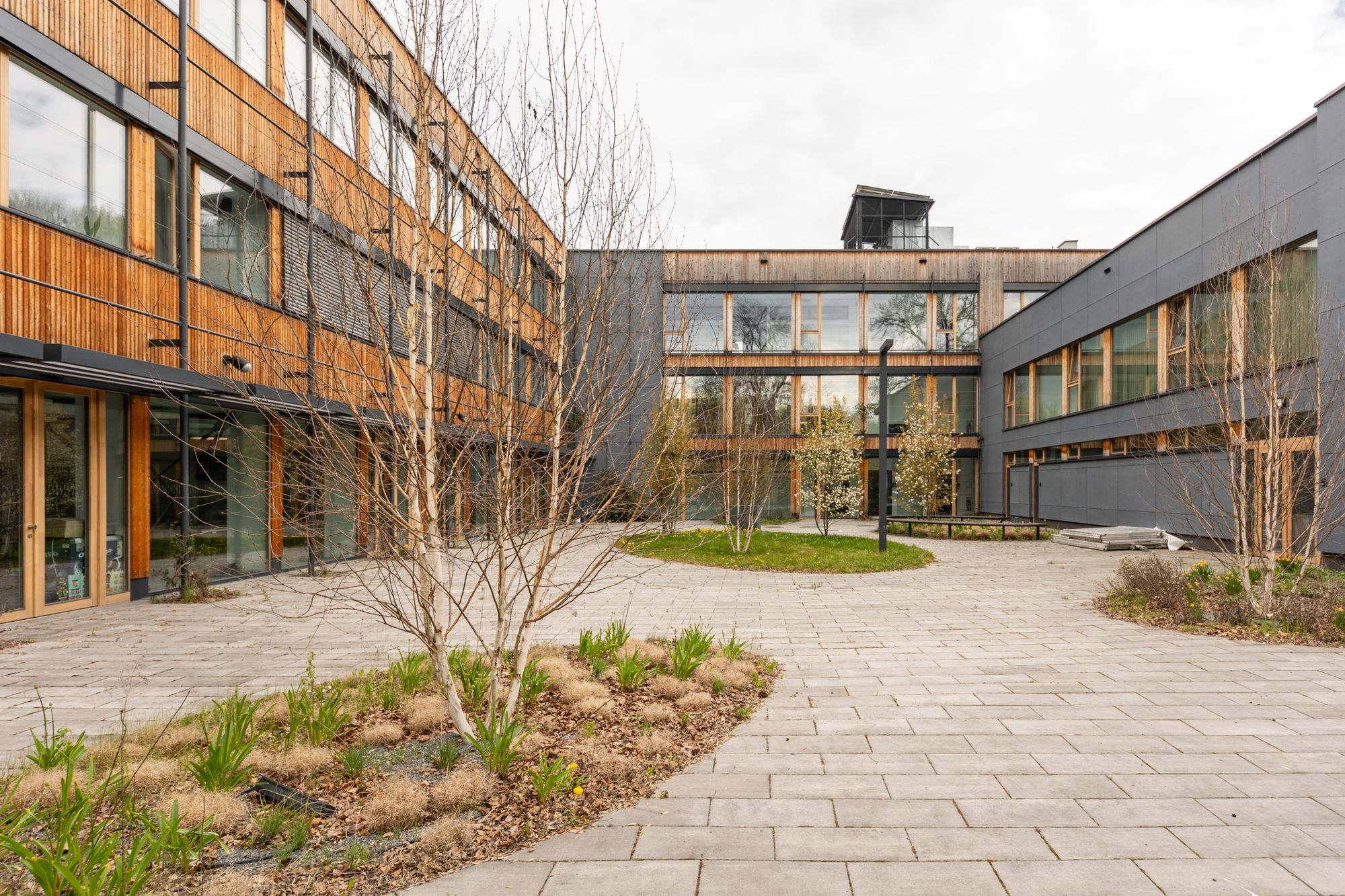
The renovation of the school on Českobrodská Street transformed the 1970s building into a sustainable structure that is energy-positive and carbon-positive in operation. Thanks to advanced measurement and control technologies, classroom temperatures and ventilation are automatically adjusted to ensure maximum comfort for students and teachers. The building, with its low embodied energy, points the way toward a new standard in 21st-century construction. The roof and facade feature 147 kWp of photovoltaic panels, supplemented by a 300 kWh battery. The building features a smart HVAC system combining ground-water heat pumps, exterior shading, and ventilation with heat recovery. Greywater recycling saves 19% of the school’s total drinking water consumption.

Modřanský cukrovar Residential District

Prague 12 — Modřany, Czechia

This Prague residential development by Skanska offers 800 low-energy apartments designed in accordance with BREEAM sustainable building certification. Even before construction began and throughout the project, the site temporarily utilized the brownfield area of the former sugar refinery, where a seasonal bike café with a parkour course and a small pump track is open, thus bringing the benefits of community life even within the metropolitan environment. The neighborhood, featuring blue-green infrastructure, offers housing with a very low energy consumption rating (PENB A) and prioritizes efficiency and sustainability even during the construction phase. Energy, water, and cost savings are ensured by sustainable technologies such as greywater treatment, solar panels, a green roof, exterior blinds, and heat recovery from ventilation.

Information Sources and Legislation

Energy Performance of Buildings Directive (EPBD 4)

The European Union (European Parliament and Council of the EU)
Legislation (directives)

The Energy Performance of Buildings Directive (EPBD) aims to improve the energy performance of buildings in the European Union (EU), taking into account specific climatic and local conditions. This legislation sets out the path that member states must follow to achieve a zero-emission building stock by 2050.

EU Taxonomy and DNSH

The European Union
Strategy, methodology

The EU Taxonomy is a classification system that uses technical screening criteria to determine whether an economic activity can be considered environmentally sustainable. The goal is to channel investor capital—and, where applicable, grants from European funds—toward sustainable projects, manage risks associated with climate change, and promote transparency.

About ClimArchiBase

The LIFE ClimArchiBase project focuses on raising awareness of sustainable architecture among professionals. It targets architects, designers, developers, public investors, and representatives of cities and municipalities. The project’s goal is to systematically compile the existing know-how on sustainable construction in Europe and the Czech Republic and to address the fragmentation of information sources and the lack of accessible information. In this way, the project will contribute to the design and implementation of sustainable building and urban projects that mitigate the construction industry’s environmental impact and adapt to climate change.

More about ClimArchiBase